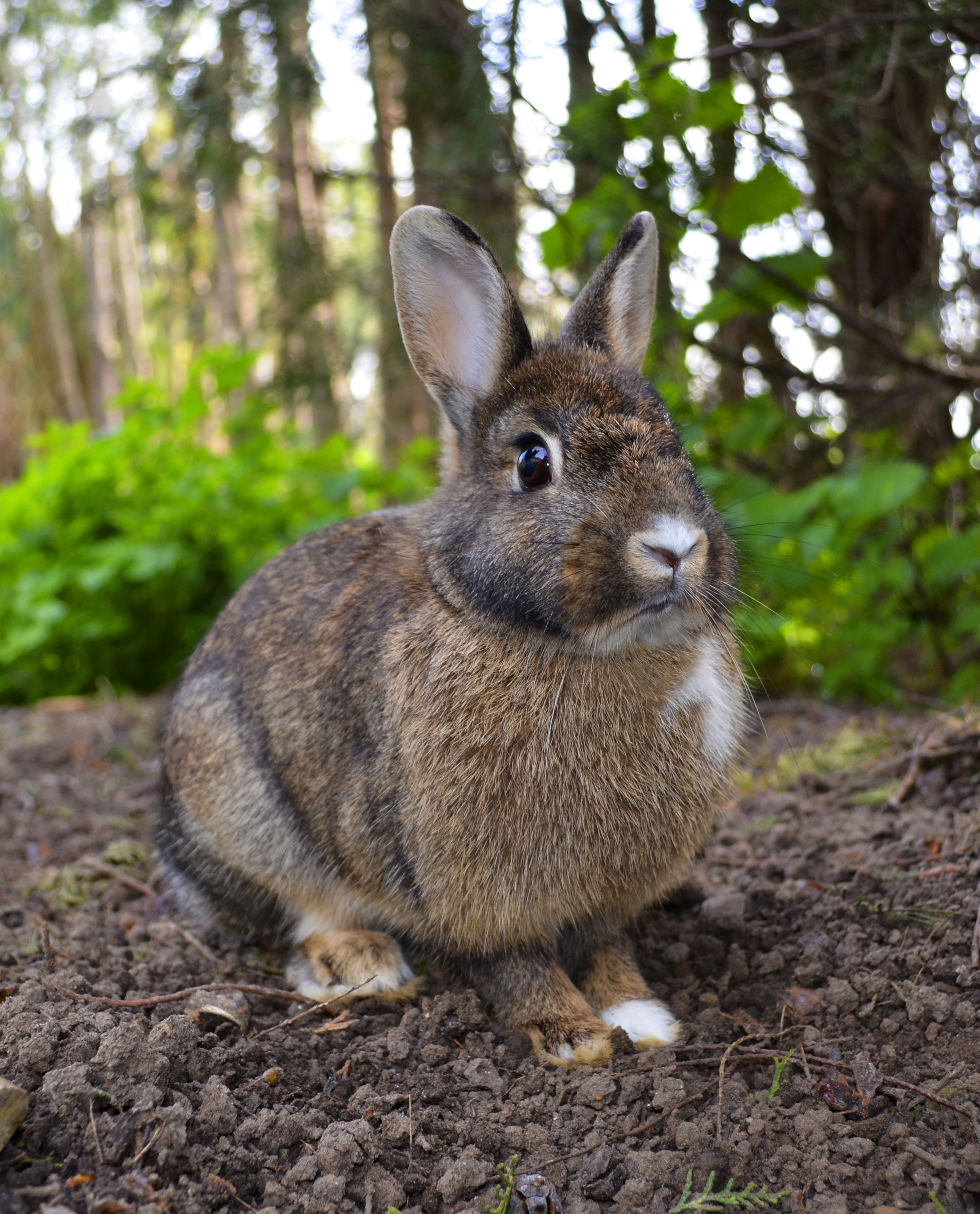
The foundation: hay, then everything else
A rabbit's digestive system is built around continuous fibre intake. The caecum — a large fermentation chamber at the junction of the small and large intestine — relies on a constant supply of indigestible plant fibre to function correctly. When fibre intake drops, gut motility slows, caecal bacteria shift towards gas-producing species, and the risk of gastrointestinal stasis increases sharply.
This means hay is not a supplement or background filler — it is the primary food source, and should make up roughly 80–85% of a rabbit's daily intake by volume. A rabbit should have unlimited access to fresh hay at all times. The pile of hay available should be roughly the same size as the rabbit's body each day.
Hay types and quality
For adult rabbits (over six months), grass hay — particularly Timothy hay — is the standard recommendation. Timothy hay has a favourable calcium-to-phosphorus ratio and a fibre content that supports dental wear as well as gut motility. Meadow hay and orchard grass are acceptable alternatives widely available in Poland.
Alfalfa (lucerne) hay is not appropriate for adult rabbits as a main hay because its high calcium and protein content can contribute to bladder sludge and obesity. It is suitable for young rabbits under six months and for underweight or convalescing adults under veterinary guidance.
Quality indicators: hay should smell fresh and slightly grassy, be pale green to light gold in colour, and contain a mix of stem, seed head, and leaf material. Hay that smells musty, contains visible mould, or has clumped from moisture should be discarded. In Poland, small animal hay is available from pet retailers and agricultural suppliers (sklep zoologiczny, sklep rolniczy); the latter often sell larger quantities at lower cost.
Pellets: portion size and selection
For a healthy adult rabbit of average size (2–3 kg), the daily pellet allowance is approximately 25 g — roughly two tablespoons. Larger breeds need more, scaled proportionally; a 5 kg rabbit can receive 50 g. Pellets are a concentrated calorie source and overfeeding leads to obesity and, paradoxically, reduced hay intake as the rabbit feels full on pellets and ignores the hay it needs for gut health.
Choose plain, extruded pellets without added dried fruit, seeds, or coloured pieces. Mixed "muesli" feeds allow selective feeding — rabbits consistently eat the high-sugar components and leave the high-fibre pieces, which defeats the nutritional purpose. Studies referenced by the House Rabbit Society link muesli-style feeds to higher rates of dental disease and obesity compared to plain pellet diets.
Note on pellet brands available in Poland: Supreme Science Selective, Versele-Laga Complete, and Beaphar Care+ are commonly stocked in Polish pet chains (Kakadu, Maxi Zoo, Zooplus.pl). All three are plain extruded pellets appropriate for adult rabbits.
Fresh greens and vegetables
Fresh greens provide moisture, variety, and additional nutrients. The daily allowance for an adult rabbit is roughly two packed cups (approximately 100 g) of mixed leafy greens per 2 kg of body weight. Introduce new vegetables gradually — one at a time, in small quantities — and monitor stool consistency for 24 hours before adding more.
Safe greens and vegetables
- Romaine lettuce and other dark leaf lettuces (not iceberg, which has minimal nutritional value and high water content)
- Fresh herbs: flat-leaf parsley, coriander (cilantro), dill, basil, mint (in small amounts)
- Kale, spring greens, pak choi — in moderate quantities; high oxalic acid content means these should not dominate the diet
- Spinach — high in oxalic acid; use as occasional variety only, not daily
- Chicory and endive — well tolerated, good fibre content
- Courgette (zucchini) and its leaves
- Bell peppers (without seeds) — a useful source of vitamin C
- Cucumber — low nutrient value but well tolerated; useful in hot weather for hydration
- Carrot tops (the green leaves) — highly palatable; the root itself is high in sugar and should be treated as an occasional treat
Foods to avoid
- Iceberg lettuce — minimal nutrition, high water content can cause diarrhoea
- Onion, garlic, chives, leeks — toxic; cause haemolytic anaemia
- Avocado — toxic to rabbits (persin content)
- Rhubarb — contains oxalic acid at levels toxic to rabbits
- Potatoes and other nightshade family plants — the leaves and stems especially are toxic; the tuber itself is high-starch and inappropriate
- Beans and legumes — high protein and gas-producing; avoid including raw or cooked beans
- Muesli mixes, bread, crackers, pasta — high in simple carbohydrates that disrupt caecal bacteria balance
- Commercial rabbit treats containing sugar, yoghurt drops, or dried fruit — these are nutritionally inappropriate regardless of marketing claims
Water access
Fresh water must be available at all times. Both sipper bottles and heavy ceramic bowls are acceptable; bowls allow more natural drinking posture and may encourage higher intake. Bottles should be checked daily as the ball-valve mechanism can fail silently. Water containers should be cleaned with hot water (not soap that might leave residue) every 1–2 days to prevent bacterial biofilm build-up.
Feeding young and juvenile rabbits
Rabbits under six months have different nutritional requirements. They need higher protein and calcium for growth, making alfalfa hay appropriate as the primary hay during this period. Pellet allowances can be higher — generally ad libitum (free access) until around four months, then gradually reduced to adult portions by six months.
Introduce vegetables slowly from around 12 weeks — start with one new vegetable at a time in very small quantities and monitor for soft droppings or diarrhoea, which indicate the digestive system is not ready for that particular food.
Signs that the diet needs adjustment
Changes in droppings are the most reliable early indicator. Healthy droppings are firm, round, and consistently sized. Smaller, irregular, or sparse droppings suggest reduced gut motility — often because hay intake is too low or the rabbit is unwell. Caecotrophs (soft, grape-like droppings that the rabbit re-ingests from the caecum) that are left uneaten indicate that the diet is too rich; reduce pellets and increase hay.
Weight loss with normal appetite may indicate dental problems interfering with hay chewing — one of the most common reasons rabbit owners visit veterinarians. Any sudden change in eating or drinking behaviour warrants a veterinary appointment.